
Learn how poor tile tools affect time, tile breakage, and cost. Discover why professional tile tools are worth it in the long run.
At first glance, a cheap tool looks like a savings. Less cost, faster decision, “it will do the job”.
But how much does a bad tool actually cost you when you factor in time, mistakes, and wasted energy?
Most craftsmen never do this calculation to the end. And that's where the difference between cheap and profitable arises.
This text is not a sales pitch. This is a realistic calculation from practice.
Wasted time that never shows up on the bill
- A bad tile cutter doesn't cut straight.
- A weak mixer does not mix evenly.
- Low-quality levelers slow down the work.
Every small correction means extra minutes.
And minutes turn into hours.
If you lose just 45 minutes on each project due to an imprecise tool, over the course of a month, those are hours that never pay off.
Time is the most expensive resource on a construction site. And the easiest to lose.
Cracked tiles – a hidden cost that hurts
One cracked tile is not a problem.
Three already are.
Especially with large formats or more expensive materials.
Bad tools increase the risk:
- imprecise cut
- vibrations
- uneven pressure
- moving the board during installation
Every mistake means a new cut, a new tile, extra time and frustration.
When it all adds up, the cheapest tool often becomes the most expensive option.
Fatigue, effort and mistakes that come later
A tool that does not work properly increases the physical effort.
- Force majeure.
- More corrections.
- More bending and repetition.
Fatigue does not come immediately.
It comes towards the end of the day – when concentration drops and mistakes occur.
And the flaws in ceramics are not minor.
They remain visible for years.
A quality tool doesn't just speed up the work.
It reduces physical strain and maintains precision down to the last tile.
Returning to the construction site – the most expensive scenario
The most expensive expense is not a cracked tile.
The most expensive cost is returning to the project.
- Repair.
- Complaint.
- Replacement.
Besides money, there is also reputation.
One bad result can undo years of recommendations.
That's why professionals don't just look at the price of the tool – they look at the reliability of its performance.
The difference between "cheap" and "affordable"
Cheap means lower initial cost.
Cost-effective means long-term stability.
Professional tool:
- lasts longer
- works more precisely
- reduces risk
- saves time
- preserves reputation
When it all adds up, the initial price difference is often the smallest factor in the whole story.
Professional tile tools as a long-term cost-effective solution
How much is a bad tile tool really costing you?
Not only in money, but in time, energy and reputation.
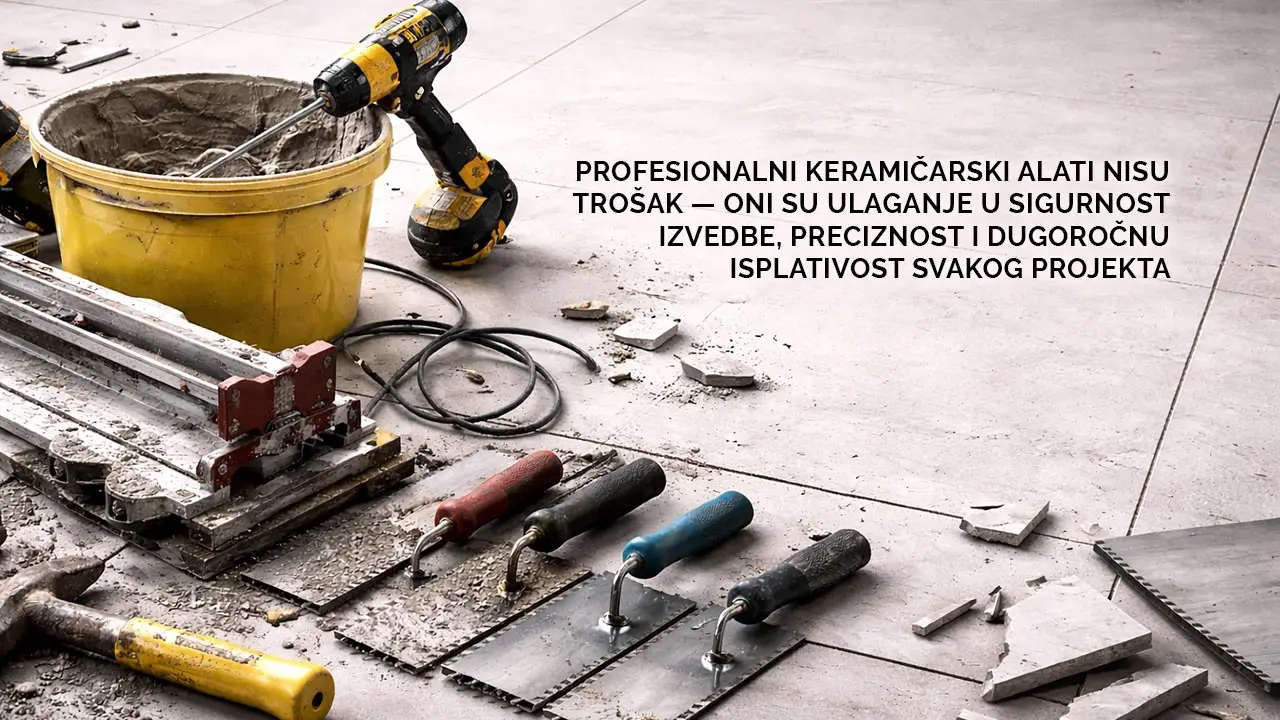
Professional ceramic tools are not an expense — they are an investment in performance safety, precision and long-term profitability of each project.
If you want to reduce risk, avoid the hidden cost of poor tools, and work with greater safety, it's time to consider professional tile tools that have been proven in practice.
Browse offer on dd-innovation.hr and compare the difference — because sometimes the best savings aren't a lower price, but a better result.